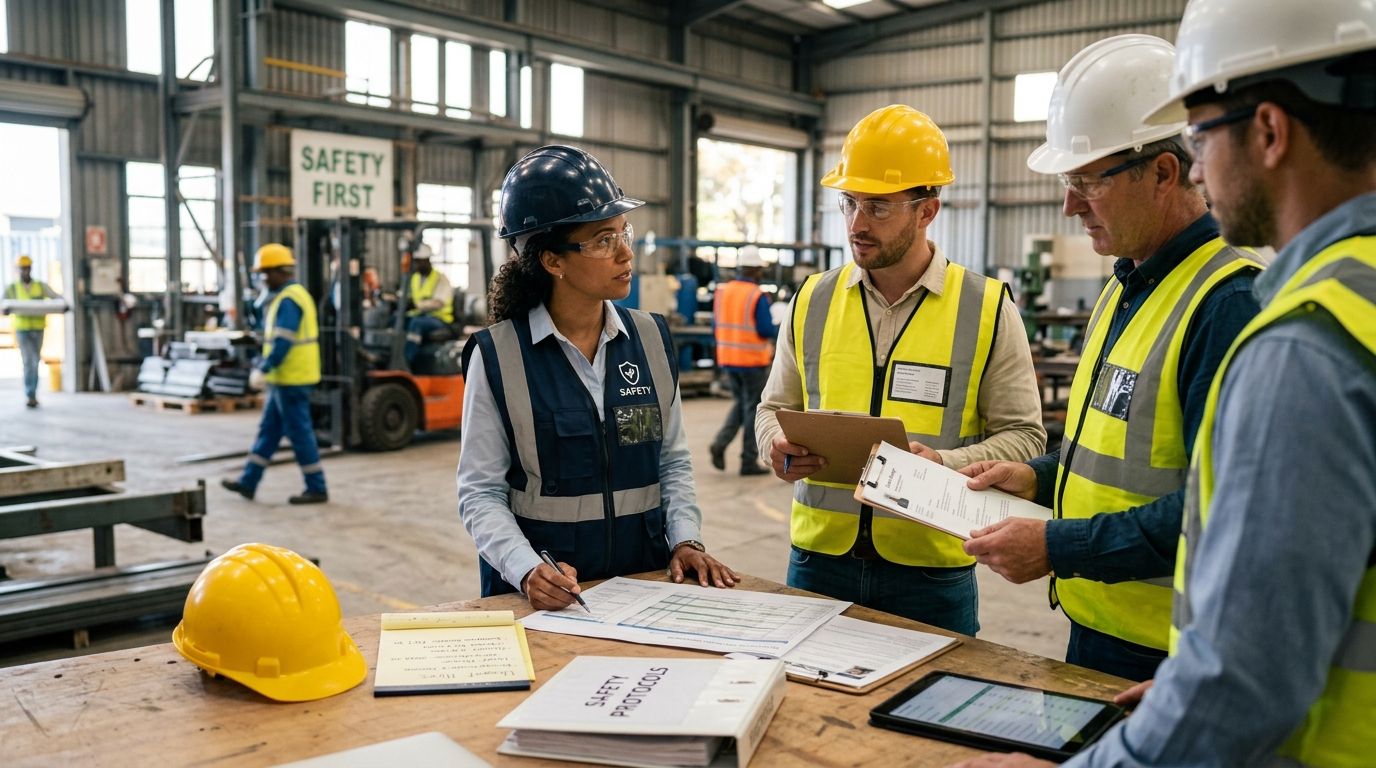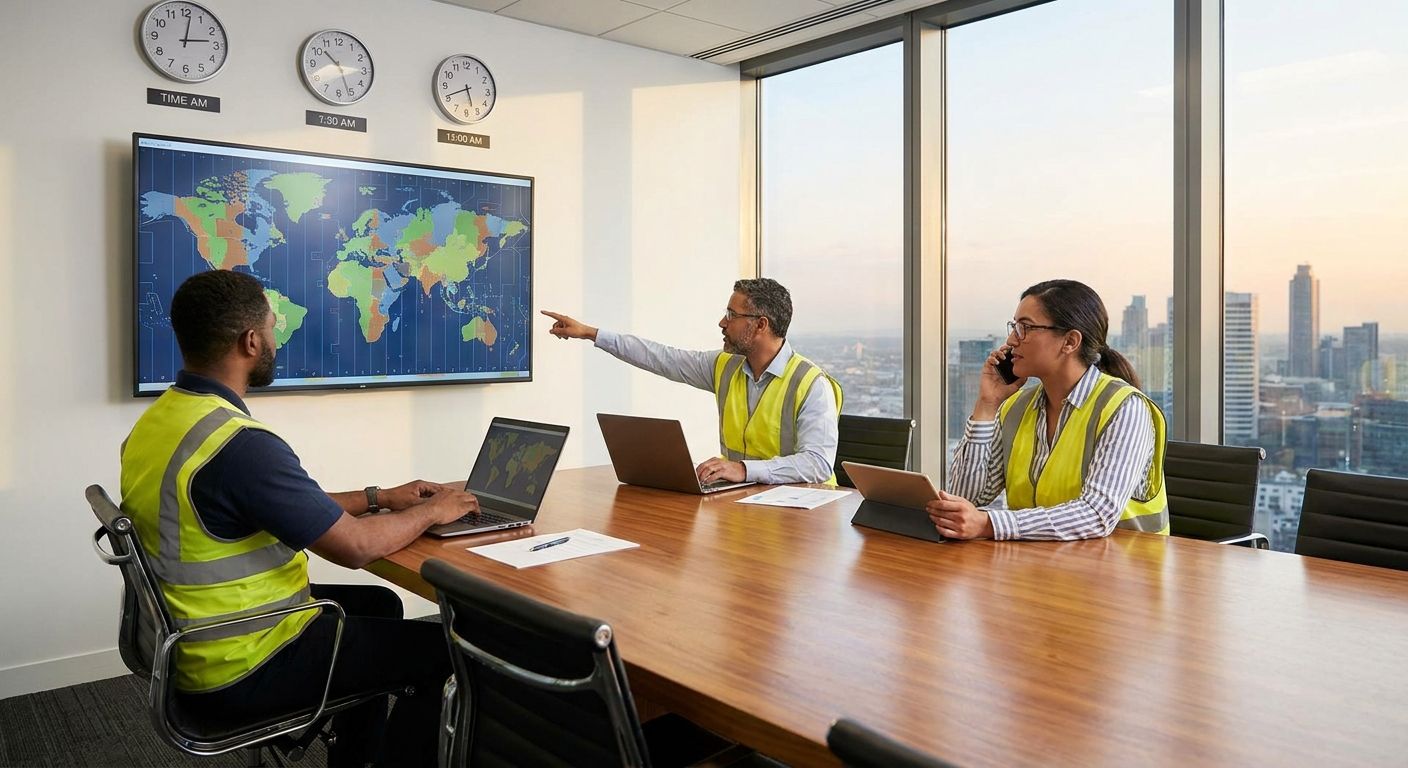
Staffing safety coverage across multiple time zones means building shift blocks around when each crew is actually on site, not around the clock at your headquarters. A project running from a Central time office with crews spread across Pacific, Mountain, and Eastern zones needs a schedule built region by region, plus a documented handoff so nothing falls into an unsupervised gap between shifts. The cost most companies miss until it bites them: certification lag when a safety professional crosses state lines mid-project, since state-specific OSHA variances don't travel with the worker automatically.
- Cover 24/7 operations with a two-shift (12-hour) or three-shift (8-hour) model built around each site's local time, not HQ hours.
- ResponsAble Staffing places safety professionals regionally so each time zone gets local coverage without cross-country flights.
- A documented shift handoff, verbal plus written log, closes the gap most incident investigations point back to.
- Follow-the-sun staffing fits multi-site contractors spanning three or more time zones; two-shift models fit a single 24/7 plant.
Why time zone coverage breaks most safety programs
Most safety staffing plans start from a single-site mindset: one shift, one office, one set of hours. That works fine until a company adds a second plant in a different zone, or a project spans three states with three different sunrise-to-sunset windows for hot work permits.
The gap shows up at the edges. A fire watch attendant clocks out at 6 p.m. Central while a crew two zones west is still mid-shift with no coverage lined up. In 2026, with more multi-state contractors running concurrent projects, that edge-of-shift gap is where incident investigations keep landing.
How to staff safety coverage across time zones
Building coverage across zones is a sequencing problem before it's a hiring problem. Work through it in this order:
- Map every site to its actual local time zone, not the zone your corporate office runs on. A safety schedule built off headquarters hours is the single most common cause of unstaffed windows.
- Pick the shift model per site: two 12-hour shifts or three 8-hour shifts. Higher-risk sites (confined space, hot work, turnaround projects) generally justify the shorter 8-hour rotation because fatigue risk climbs fast on safety-critical roles.
- Build regional headcount instead of one national roster. A safety professional based in the same zone as the site starts on day one; someone flown in from three zones away loses a travel day and needs local permit familiarity before they're fully useful.
- Standardize the handoff protocol across every zone, even when shift lengths differ. Use a night shift safety staffing schedule as the template, then adapt shift length per site rather than writing a new protocol for every zone.
- Centralize credential and certification tracking in one system regardless of location, so a lapsed card in one time zone doesn't slip past because the safety manager overseeing it is asleep three zones away.
| Model | Shift length | Zones it fits | Best for |
|---|---|---|---|
| Two-shift | 12 hours | 1-2 zones | Single 24/7 plant, steady-state operations |
| Three-shift | 8 hours | 1-3 zones | High-risk sites, confined space, hot work |
| Follow-the-sun | Staggered by region | 3+ zones | Multi-state contractors, national rollouts |
Two-shift model: 12-hour coverage
The two-shift model splits the day into two 12-hour blocks, usually 6-to-6. It's the simplest staffing math: two safety professionals per role per site cover a full 24 hours.
The tradeoff is fatigue. Twelve-hour shifts on safety-critical roles like confined space attendant or fire watch push alertness down in the back half of the shift, which is exactly when a second set of eyes matters most. Buy this model for steady-state 24/7 plants with lower-intensity risk profiles; skip it for turnaround or shutdown work where attention degrades faster under sustained exposure.
Three-shift model: 8-hour coverage
Three 8-hour shifts need three safety professionals per role per site, not two. That's 50% more headcount than the two-shift model, and it's the right tradeoff for high-consequence work.
Shorter shifts mean sharper attention on hot work permits, confined space entries, and process safety walkthroughs where a lapse costs more than payroll. Companies running night shift safety staffing for 24/7 operations on higher-risk sites generally land here once the incident data from a two-shift trial shows fatigue-linked near-misses clustering in hours nine through twelve. Buy this model for confined space, hot work, and turnaround coverage; hold off if the site risk profile doesn't justify the added headcount.
Follow-the-sun model: coverage across 3+ time zones
Follow-the-sun staffing hands coverage off geographically as the day moves west to east, or vice versa, so no single crew works an unnatural overnight shift just because the project spans multiple states. A safety manager in Eastern time hands off to a counterpart in Pacific time as evening falls, and each professional works daylight hours in their own zone.
This model works because it matches local labor pools to local hours instead of importing overnight workers from somewhere else. It's the standard approach for multi-state contractor safety staffing running concurrent projects across three or more zones. Buy this model for national rollouts and multi-site expansions; skip it for a single plant, where it adds coordination overhead with no coverage benefit.
Why safety staffing needs vary by time zone
- Site risk level — turnaround and shutdown work needs shorter shifts than steady-state operations, regardless of zone.
- State-specific certification rules — Cal/OSHA and other state plans layer requirements on top of federal OSHA 10/30 cards.
- Local labor availability — some regions have a thinner bench of certified confined space or fire watch attendants, which changes how far you staff from the site.
- Union agreements — projects under a union contract in one state can carry different staffing ratios than a non-union site two zones over.
- Shift differential expectations — overnight and cross-zone coverage typically commands different pay expectations by region, which affects time-to-fill.
- Weather and daylight windows — hot work and outdoor confined space entries are constrained by daylight in some zones more than others, shifting when coverage actually needs to peak.
“A safety program fully staffed at 2 p.m. and empty at 2 a.m. isn't a safety program — it's a liability gap.”
Build multi-zone safety coverage
Talk through your shift model and regional headcount needs.
How many safety professionals do you need for 24/7 coverage?
Full 24-hour coverage takes two safety professionals per role under a 12-hour rotation, or three under an 8-hour rotation, per site. Multiply that by the number of time zones your sites span, plus one for planned time off, before you land on a real headcount number.
Should you hire local to each time zone or fly staff in?
Hire local whenever the project runs long enough to justify recruiting time, since a safety professional already living in the zone starts on day one with no travel day lost. Fly-in coverage still makes sense for short-duration, fast-track jobs where recruiting locally would take longer than the project itself.
Do OSHA certifications transfer across state lines?
Federal OSHA 10-hour and 30-hour cards transfer across every state, since they're issued under a single federal outreach program. State-plan requirements, like those under Cal/OSHA, layer additional rules on top and don't automatically carry over when a safety professional moves between zones.
FAQ
What's the best shift model for safety coverage across time zones?
A follow-the-sun model works best across three or more time zones because it matches local labor pools to daylight hours instead of forcing overnight work. Single-site 24/7 plants do better with a straightforward two-shift or three-shift model.
Is a 12-hour or 8-hour shift better for safety-critical roles?
An 8-hour shift is better for high-risk work like confined space entry and hot work because attention holds up longer across the shift. A 12-hour shift works fine for lower-risk, steady-state monitoring roles.
How much extra headcount does a three-shift model need versus two-shift?
A three-shift model needs 50% more headcount than a two-shift model for the same role, since three 8-hour shifts require three people where two 12-hour shifts require two. That added cost buys sharper attention on high-consequence tasks.
Do safety staffing agencies place professionals in every U.S. time zone?
ResponsAble Staffing places vetted safety professionals across all six U.S. time zones, including Alaska and Hawaii, for construction, oil and gas, and manufacturing sites. Coverage depends on local certified talent availability in each region.
What causes coverage gaps in multi-time-zone safety programs?
Coverage gaps happen when a schedule is built around headquarters hours instead of each site's local time, leaving overnight or off-hours windows unstaffed. A documented shift handoff protocol closes most of that gap.
Can one safety manager oversee sites in different time zones?
One safety manager can oversee multiple zones for administrative and compliance tracking, but on-site coverage still needs a dedicated safety professional physically present in each zone during working hours. Remote oversight doesn't replace on-site presence for OSHA-covered activities.
How do you track certifications across a multi-zone safety team?
Centralize certification tracking in one system that flags expiration dates regardless of which time zone or state a safety professional works in. A safety staffing agency with a vetted, credential-tracked bench removes this burden from an internal team spread across zones.
One last thing
The zone that gets forgotten most often isn't the farthest one, it's the one closest to a shift change. Coverage gaps cluster around handoff windows, not the deep overnight hours everyone worries about, because that's when responsibility quietly shifts from one person to another without a written record. Fix the handoff log before you fix the headcount count, and most of the 2026 incident near-misses tied to time zone staffing disappear.